No-Dig
Sewer Repair
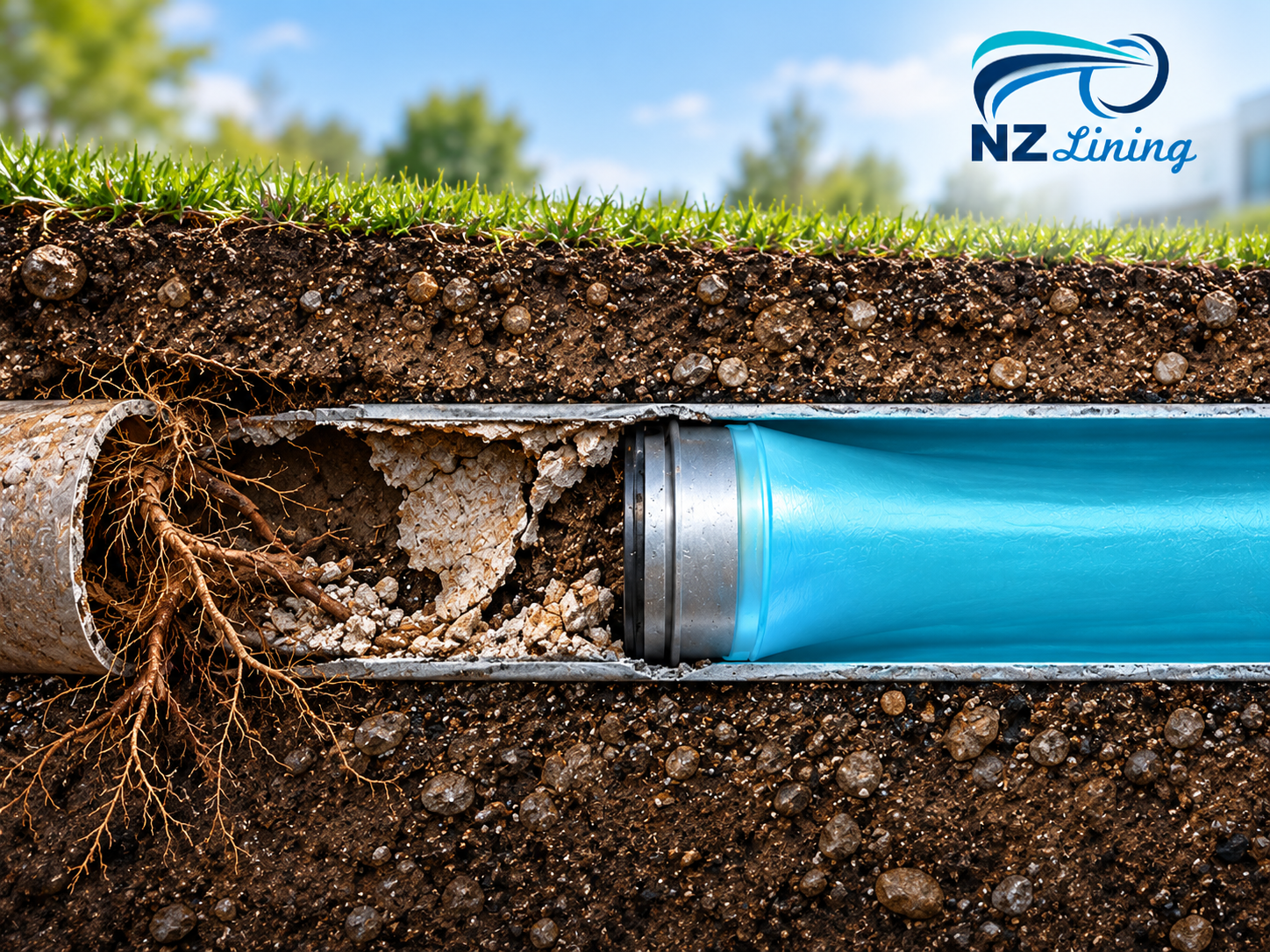
Repair underground sewer and stormwater pipelines without unnecessary excavation using specialised trenchless rehabilitation solutions from NZ Lining.
Fix the pipeline underground — without digging everything up.
Damaged underground sewer and stormwater pipelines do not always require traditional excavation and replacement.
Where conditions allow, NZ Lining can rehabilitate the damaged area from inside the existing pipeline, helping reduce surface disruption and reinstatement requirements.
This approach can be particularly valuable beneath roads, commercial properties, driveways, industrial sites and existing infrastructure.
Problems no-dig rehabilitation can address
The appropriate rehabilitation method depends on the actual condition of the pipeline. CCTV inspection allows the defect to be assessed before a repair solution is selected.
Root Intrusion
Roots entering through damaged joints and lateral connections can restrict flow and contribute to ongoing pipeline problems.
Water Infiltration
Defective connections can allow groundwater into sewer networks and unnecessarily increase system flow.
Faulty Connections
Damaged or deteriorated lateral connections may be suitable for internal rehabilitation instead of open excavation.
Deteriorated Pipe
Suitable damaged pipeline sections may be rehabilitated internally rather than completely excavated and replaced.
Rehabilitating a critical connection in the sewer network
Lateral Junction Repair — LJR — rehabilitates the connection between a lateral pipeline and the main sewer from inside the existing system.
The system can seal the main-to-lateral junction, help address root intrusion and infiltration, and repair suitable faulty lateral connections without traditional excavation.
From inspection to completed repair
The repair process begins by understanding what is actually happening inside the pipeline.
CCTV Inspection
Inspect the pipeline and confirm the location and condition of the defect.
Preparation
Prepare the appropriate liner and rehabilitation system for the specific pipeline.
Positioning
Specialised equipment positions the rehabilitation material at the affected area.
Installation
The liner is installed against the existing pipeline and held in position during curing.
Verification
The completed rehabilitation can be visually inspected following installation.
Repair the pipeline while minimising disruption above ground.
Traditional excavation may involve cutting through roads, driveways, landscaped areas or operational sites simply to reach a damaged underground pipeline.
Trenchless rehabilitation provides another approach by working through the existing pipeline wherever technically appropriate.
Less need to dig directly down to the damaged pipeline.
Minimise restoration of surrounding surfaces.
Focus rehabilitation on the affected area.
Understand the pipe condition before selecting a solution.
Particularly valuable around developed and operational sites.
Delivered by NZ Lining's pipeline rehabilitation team.
Repair the pipe.
Minimise the excavation.
Talk to NZ Lining about CCTV inspection, no-dig sewer repair, lateral junction rehabilitation and trenchless pipeline solutions.